
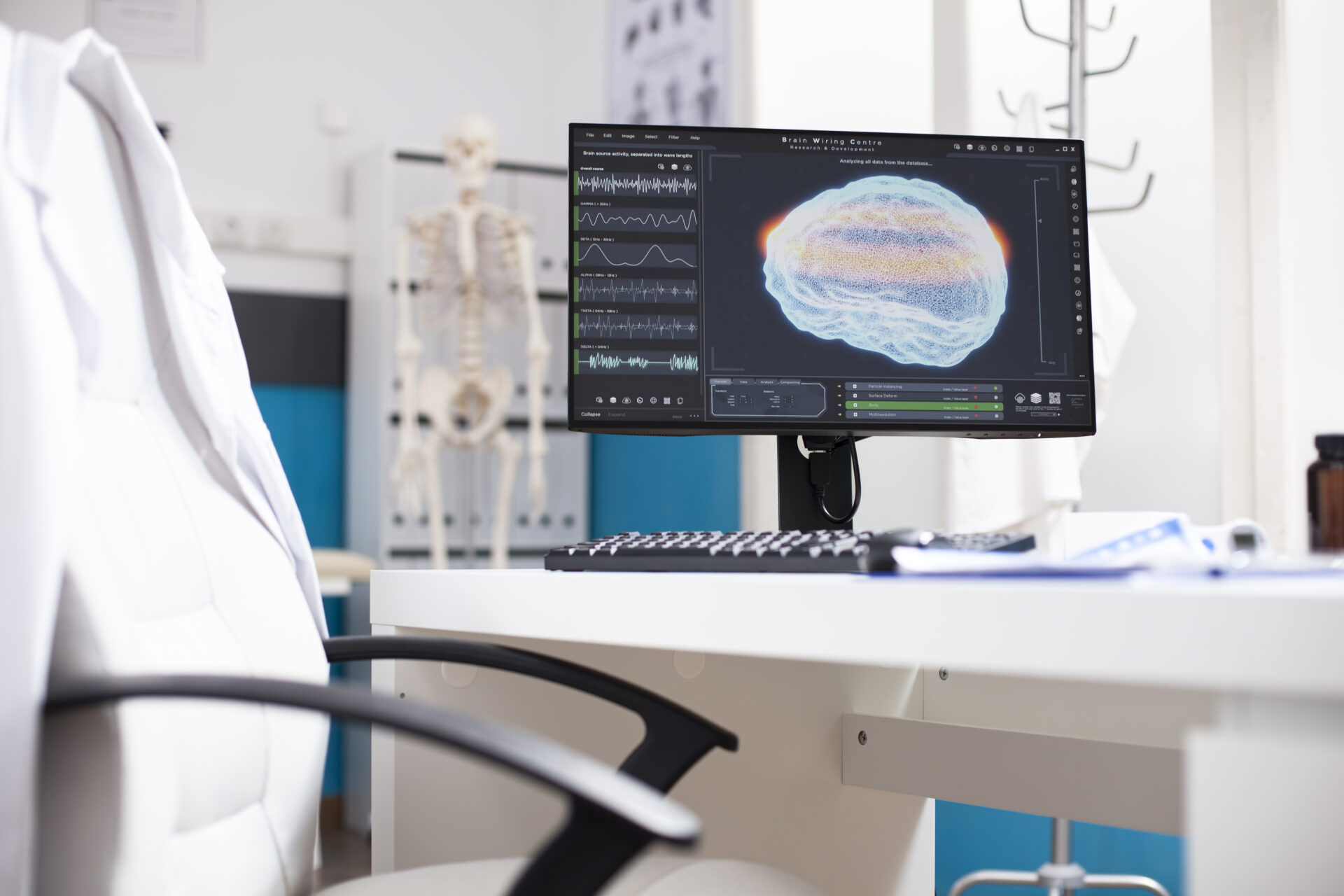
Chronic pain can change the way the nervous system behaves. Pain may continue even after an injury has healed, or it may become stronger than expected because nerves are sending abnormal signals to the brain.
For patients who have tried medication, physical therapy, injections, or other treatments without enough relief, neuromodulation may be considered as part of an advanced pain management plan.
The benefits of neuromodulation are mainly connected to how it works: instead of only treating inflammation or tissue damage, neuromodulation targets pain signals in the nervous system.
At Gramercy Pain & Neuroscience Center in Beverly Hills, neuromodulation is part of our advanced treatment approach for selected chronic pain conditions. Our center focuses on advanced care for spine, joint, and nerve-related pain, with a mission to help patients reduce pain, restore function, and improve overall well-being.
Neuromodulation in Simple Terms
Neuromodulation is a treatment approach that uses targeted stimulation to change how pain signals travel through the nervous system.
When nerves send pain signals repeatedly, the brain may continue to receive pain messages even when other treatments do not fully explain or control the symptoms.
Neuromodulation aims to adjust these signals before they become overwhelming. It does not simply “hide” pain. It works by influencing the way pain information is transmitted.
This is why neuromodulation may be considered for certain chronic pain conditions, nerve-related pain, and hard-to-treat pain patterns.
Why Neuromodulation Is Different From Standard Pain Care
Many pain treatments focus on reducing inflammation, relaxing muscles, improving movement, or treating a specific injured tissue.
Neuromodulation is different because it focuses on pain communication.
It may be considered when:
Pain is nerve-related
The pain may feel burning, shooting, electric, tingling, or hypersensitive.
Pain is chronic
Symptoms may continue for months or years despite other treatment attempts.
Pain is localized but difficult to treat
Some pain areas are hard to manage with standard procedures.
Pain affects daily life
Sleep, walking, work, mood, and activity may all be affected.
The goal is functional improvement
The focus is not only lowering pain numbers, but helping patients live more comfortably.
Benefit 1: Targeted Pain Relief
One of the main benefits of neuromodulation is that it may target specific pain pathways.
For example, Dorsal Root Ganglion stimulation, also called DRG stimulation, is a specialized form of neuromodulation used for chronic pain, especially in areas that can be difficult to address with conventional therapies, including the lower limbs, groin, knee, and pelvis.
This targeted approach may be helpful when pain is localized to a specific area and other treatments have not provided enough relief.
Benefit 2: Helpful for Hard-to-Treat Pain
Some pain conditions are complex. They may involve nerve sensitivity, chronic inflammation, previous injury, surgery, or changes in how the nervous system processes pain.
Neuromodulation may be considered for hard-to-treat pain conditions such as:
- Complex regional pain syndrome
- Chronic nerve pain
- Post-surgical pain
- Certain lower limb pain patterns
- Chronic back or neck pain in selected cases
- Pain that has not responded well to standard treatment
Complex Regional Pain Syndrome may require a multidisciplinary approach, and advanced interventions such as spinal cord stimulation or other neuromodulation techniques may help modulate pain signals in the nervous system.
Benefit 3: It May Reduce Reliance on Medication
Many patients with chronic pain want to avoid relying only on medication. Medication can be helpful, but it may not always address the underlying pain signaling problem.
Neuromodulation may offer another path by targeting the nervous system directly. For some patients, this may support better pain control as part of a broader plan.
This does not mean every patient can stop medication. Any medication changes should be guided by a medical provider. But neuromodulation may be part of a strategy that reduces the need for repeated short-term pain relief.
Benefit 4: It May Improve Function and Daily Activity
Pain relief matters, but function matters too.
Patients often want to return to normal activities such as walking, working, exercising, sleeping, traveling, or spending time with family without pain controlling the day.
By reducing pain signals, neuromodulation may help some patients:
- Move with more confidence
- Sleep more comfortably
- Participate in physical therapy
- Reduce pain-related fear of movement
- Improve daily function
- Return to selected activities more comfortably
At Gramercy, minimally invasive procedures are presented as options that may support faster recovery, improved function, and decreased pain.
Benefit 5: Adjustable Treatment
Some neuromodulation systems are adjustable. This means the stimulation settings may be changed based on the patient’s pain pattern, comfort, and response.
This can be important because chronic pain is not always the same every day. Pain may change with activity, posture, stress, sleep, or flare-ups.
For example, DRG stimulation can include adjustable stimulation as one of its benefits.
An adjustable approach may allow the care team to personalize treatment more closely to the patient’s needs.
Benefit 6: A Trial May Be Used Before Long-Term Implantation
Some neuromodulation treatments may begin with a trial phase. This allows the patient and provider to evaluate whether the therapy helps before moving forward with a longer-term device.
At Gramercy, DRG stimulation may involve two stages: a temporary trial phase and, if the trial provides meaningful relief, a longer-term implantation phase.
During the trial, temporary leads are placed near the targeted nerves so the patient can see whether stimulation helps reduce pain and improve daily function before moving forward with the next step.
This trial period can help patients make a more informed and confident treatment decision.
Benefit 7: Minimally Invasive Approach for Selected Patients
Neuromodulation is not the same as traditional open surgery, although some forms may involve device implantation.
For selected patients, neuromodulation may offer a minimally invasive option when conservative care has not provided enough relief.
The right treatment depends on diagnosis, health history, imaging, symptoms, and treatment goals.
Benefit 8: It May Help Patients With Localized Nerve Pain
Some pain is difficult to treat because it affects a very specific area. For example, pain in the knee, foot, pelvis, groin, or lower limb may not always respond well to broader pain treatments.
DRG stimulation may be helpful for more focused pain patterns because it targets specific nerve roots involved in pain signaling. At Gramercy, we use DRG stimulation as a targeted neuromodulation option for selected patients with hard-to-treat chronic pain in specific body regions.
This makes it different from approaches that affect larger areas of the nervous system.
Who May Be a Candidate for Neuromodulation?
Neuromodulation is not right for every patient. It is usually considered after a proper diagnosis and when other appropriate treatments have not provided enough relief.
A patient may be evaluated for neuromodulation if they have:
- Chronic nerve-related pain
- Pain that has lasted for months or longer
- Pain after surgery or injury
- Complex regional pain syndrome
- Pain that affects sleep, work, walking, or daily life
- Pain that has not improved enough with medication, therapy, or injections
- A clear pain pattern that may respond to targeted stimulation
- Realistic expectations about treatment goals
A consultation is needed to determine whether neuromodulation is appropriate.
What Neuromodulation Is Not
Neuromodulation can be a helpful option for selected patients, but it is important to set realistic expectations.
Neuromodulation is not:
A guaranteed cure
Results vary from patient to patient.
The first treatment for every pain condition
Many patients begin with conservative care, injections, physical therapy, or medication management.
A replacement for diagnosis
The pain source still needs to be evaluated carefully.
A solution for every type of pain
Some pain may come from structural, inflammatory, medical, or surgical issues that need other treatment.
A reason to ignore rehabilitation
Movement, strength, posture, and lifestyle support may still be part of the care plan.
What to Ask Before Considering Neuromodulation
Before deciding on neuromodulation, patients should feel comfortable asking clear questions.
Useful questions include:
What type of pain do I have?
Understanding the diagnosis helps explain why neuromodulation is being considered.
Why is neuromodulation appropriate for my case?
The treatment should match the pain source and goals.
Is there a trial phase?
Some systems allow a temporary trial before long-term treatment.
What are the risks?
Every procedure has possible risks, including infection, bleeding, discomfort, device-related issues, or incomplete relief.
What improvement is realistic?
The goal may be reduced pain, better function, improved sleep, or increased activity, not always complete pain removal.
What happens if it does not work?
A good treatment plan includes next steps.
Neuromodulation in Beverly Hills, Los Angeles, Sherman Oaks, Encino, Brentwood, and Santa Monica
Patients in Beverly Hills, Los Angeles, Sherman Oaks, Encino, Brentwood, and Santa Monica often look for advanced options when chronic pain has not improved with standard care.
Gramercy Pain & Neuroscience Center provides advanced care in an elegant healthcare space focused on clinical excellence and transformative innovation.
If you are searching for the benefits of neuromodulation, the best first step is a personalized evaluation to understand whether your pain pattern may respond to this type of treatment.
Final Thoughts
Neuromodulation may offer important benefits for selected patients with chronic nerve-related pain, hard-to-treat pain, or pain that has not improved enough with standard care.
Its potential benefits include targeted pain relief, improved function, adjustable treatment, a trial phase before long-term implantation in some cases, and a minimally invasive approach for certain chronic pain conditions.
At Gramercy Pain & Neuroscience Center in Beverly Hills, patients receive personalized care focused on identifying the source of pain, explaining treatment options clearly, and supporting better comfort, movement, and quality of life.