

Burning or tingling feet can disrupt sleep, a walk, a round of golf or a long flight, and the medicine for them can leave you drowsy or dizzy. Neuropathy is damage to the nerves outside the brain and spinal cord. Specifically, this guide covers diabetic neuropathy: nerve pain from diabetes, usually in the feet. Chemotherapy-related, post-shingles, carpal tunnel and spine-related nerve pain have different causes, so do not assume treatments studied in them work here.
The short answer: the American Academy of Neurology’s 2022 guideline supports four classes of medicine for reducing diabetic neuropathy pain and ranks none best. It says physicians should weigh side effects and other health conditions, and the goal is less pain, not none. According to the American Diabetes Association, nothing currently undoes the nerve damage. Spinal cord stimulation, an implanted device, is a further option that rests on one main trial with real limits.
Jump to: medicines, nerve stimulation, questions for your physician, foot, medicine and emergency warning signs.
Where does treatment start: the diabetes or the pain?
Both, with different jobs. The American Diabetes Association’s 2026 standards recommend optimizing blood sugar management to prevent or delay neuropathy in type 1 diabetes and to slow its progression in type 2, where the evidence is weaker. That work belongs to your diabetes care team. However, the same standards say blood sugar management is not an established treatment for the pain itself.
Which medicines do guidelines support for the pain, and what are the trade-offs?
The American Academy of Neurology’s 2022 guideline covers oral and topical medicines, not devices. For diabetic neuropathy pain it says physicians should offer one or more of four classes: gabapentinoids, SNRIs, tricyclics and sodium channel blockers. Its verdicts and trade-offs follow. Its words “probably” and “possibly” compare each class with placebo and show certainty, not which class works better; one medicine can rate lower than its class.
Gabapentinoids (gabapentin, pregabalin). Probably improve pain; small effect, moderate confidence. Pregabalin alone: possibly; low confidence. Trade-offs: dizziness, drowsiness, leg swelling.
SNRIs, an antidepressant class (duloxetine, venlafaxine). Probably improve pain; small effect, moderate confidence. Trade-offs: nausea, fatigue, dizziness.
Tricyclics, an older antidepressant class (amitriptyline only). Possibly improve pain; large estimated effect, low confidence. Trade-offs: dry mouth, constipation, drowsiness, dizziness; may be less well tolerated with constipation or trouble passing urine.
Sodium channel blockers (lamotrigine, lacosamide, oxcarbazepine). Probably improve pain; medium effect, moderate confidence. Trade-offs: nausea, fatigue, dizziness.
Opioids, including tramadol and tapentadol. Reduced pain in short trials; the guideline advises against them, since no long-term trial shows meaningful benefit and side effects can be serious.
The ranking, its limits and a safety warning
The guideline ranks none of the four classes: it judged their estimates comparable (three sit just above or below its medium-effect cutoff; tricyclics’ larger estimate has low confidence). It says people may need to try a series of medicines, and notes limits: trials mostly ran 4 to 13 weeks, data are lacking beyond 16 weeks for any treatment, and nothing yet predicts who will respond best. Trials count about a 30% pain reduction as success, but it is a yardstick, not a prediction.
Across the neurology guideline’s medicine trials, age was not significantly linked to pain reduction (side effects were not analyzed). The American Diabetes Association’s standards say gabapentinoid and SNRI side effects may be more severe in older people, and that tricyclics’ anticholinergic side effects (such as dry mouth and constipation) may limit the dose, especially at 65 and over.
In 2019, the U.S. Food and Drug Administration issued a safety warning that gabapentin and pregabalin may cause serious breathing difficulties, especially in people who take opioids or other sedating medicines, have chronic lung disease, or are older. Changes to any prescribed medicine are made with the prescribing physician.
What else is used besides pills?
Topicals go on the skin. The American Diabetes Association’s standards say capsaicin (chili-pepper extract) is an option to consider if you cannot take oral medicines. The American Academy of Neurology guideline gives it a weaker recommendation, meaning physicians may offer it: it possibly improves pain more than placebo, with a small effect and low confidence. The only adverse events in the two trials reviewed were reactions at the application site.
Cognitive behavioral therapy, exercise, Tai Chi and mindfulness also sit at the same weaker level. Supplements the guideline reviewed have thin support: one small ginkgo biloba trial pointed toward a benefit, with low confidence, and three others (vitamin E tocotrienols, a B-vitamin product and nutmeg extract) were possibly no better than placebo.
Where does nerve stimulation fit, and how strong is the evidence?
Gramercy Center offers neuromodulation procedures. Its own approach is in a separate section after the evidence.
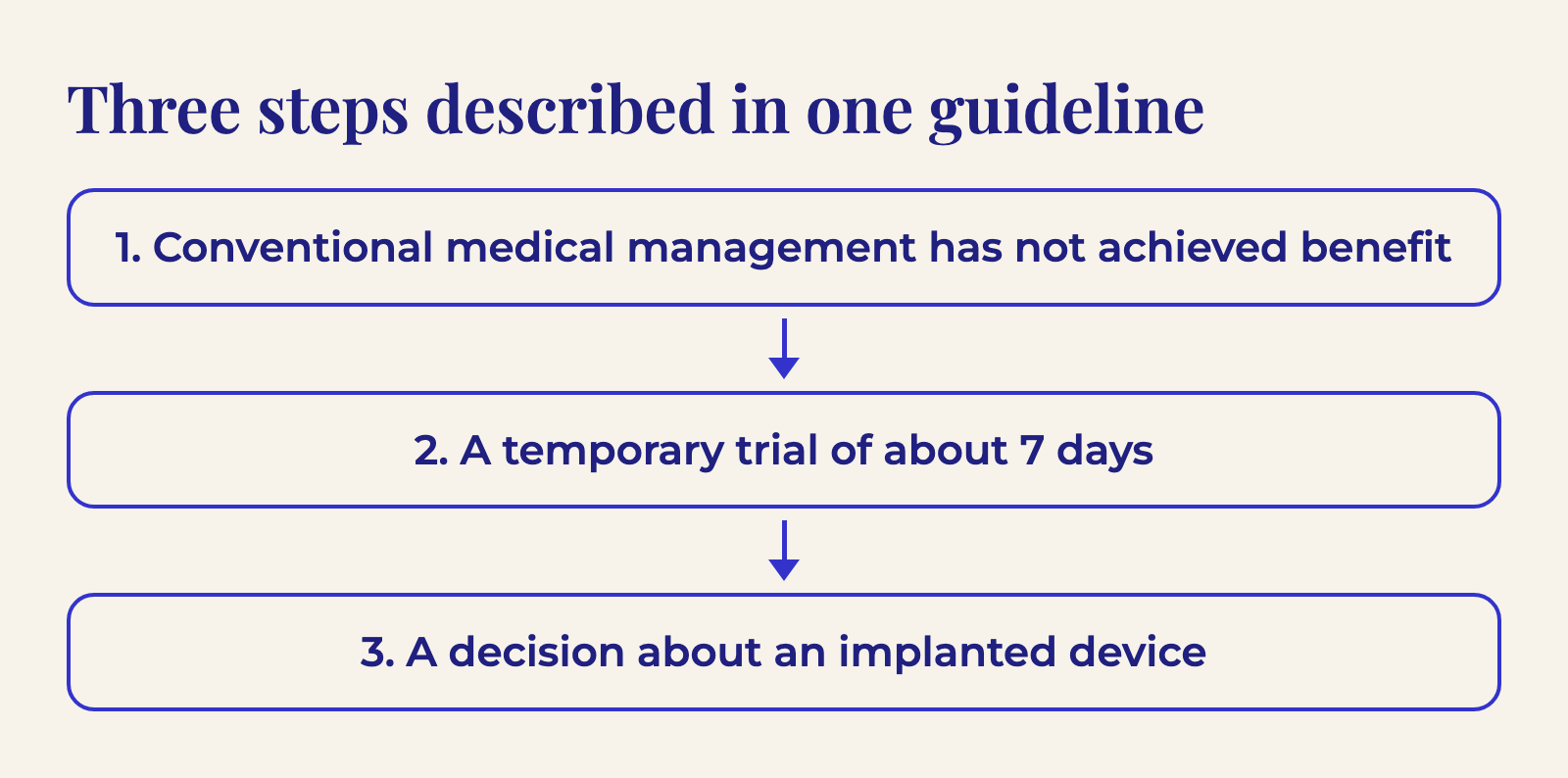
Spinal cord stimulation is an implanted device that sends electrical pulses to the spinal cord, intended to change how the body processes pain signals. The American Society of Pain and Neuroscience’s 2024 guideline says it may be considered for painful diabetic neuropathy in the lower limbs “when conventional medical management has failed to achieve benefit.” It describes a temporary trial of about 7 days before the device is surgically implanted. People with diabetes are at higher risk of severe infection, it notes, and physicians consider blood sugar control before elective surgery.
One of the guideline’s authors led the main trial below, and unrestricted educational grants from companies including Nevro, which makes that trial’s device, supported the guideline.
The main trial
The main evidence is one 2021 randomized trial of 216 adults whose pain had lasted a year or more despite medicines. The trial assigned people by chance to usual medical care alone or with one high-frequency stimulation system added. In addition, it was open-label (everyone knew who had the device) and funded by the device’s maker.
The main trial reports no results by age; its average age was about 61. This guide does not cover what implantation and recovery involve, so ask your physician.
At 3 months, 75 of the 95 people in the device group with a known result (79%; 113 were assigned) had at least a 50% pain reduction with no worsening on a clinician-rated neurological exam, against 5 of 94 (5%) on usual care alone (103 assigned). Not everyone benefits: the other 20, among them people who did not get an implant, did not reach that bar. Medicine trials count a 30% reduction as success, so you cannot set the figures side by side.
Among about 180 people evaluated at 6 months, average pain scores (0 to 10) had fallen from 7.6 to 1.7 with the device and from 7.0 to 6.9 without it. Then 76 of 93 people (82%) in the usual-care group switched to the device, so the randomized comparison effectively ends there. The authors note that placebo effects may be significant with an active device. The exam also improved more often with the device, but that is an exam finding, not proof the nerves changed.
Earlier, smaller trials
Two earlier, smaller randomized trials were rated at high risk of bias in a 2021 systematic review, which still described the overall evidence as moderate-quality. A 2022 analysis combining randomized trials found lower average pain scores with stimulation added to medical care (moderate certainty), but noted a limited number of trials.
Wound, infection and lead problems
In the main trial’s first 6 months, 5 of 90 implanted people (6%) had wound or infection problems, including 2 whose device was removed for infection. However, that follow-up is short for a long-term implant. A 2021 Cochrane review of spinal stimulators for chronic pain in general, not diabetic neuropathy, rated certainty low or very low and reported infection in 3% to 7% of people, lead problems (trouble with the wires that carry the pulses) in 0.9% to 14%, and repeat procedures in 2% to 31%.
Dorsal root ganglion and peripheral nerve stimulation
Dorsal root ganglion stimulation (aimed at nerve cells beside the spine) and peripheral nerve stimulation (aimed at a single nerve) have thinner evidence by comparison. The 2024 pain-society guideline gives each a weaker recommendation, based on small studies and case reports for the first and three non-randomized studies for the second. Spinal cord stimulation results do not carry over to either.
How do you weigh these options against each other?
The American Academy of Neurology guideline tells physicians to consider side effects, other health conditions, cost and your preferences. It covers medicines only, and the main device trial added the device to usual care, so neither compares the two. If conventional medical management has not achieved benefit, the last question below is worth raising.
Questions to bring to your physician:
- What is the goal (sleep, golf, a long flight), and how will we judge it?
- What are the main side effects of what I take, given my age and other conditions?
- What would we change if this is not enough?
- Would a referral for a stimulation trial be reasonable, and what would implantation, recovery and the risks involve at my age?
What a consultation with Dr. Preet Patel involves
Gramercy’s approach, not research evidence.
Gramercy Center offers neuromodulation procedures, including spinal cord stimulation, dorsal root ganglion stimulation and peripheral nerve stimulation, and has a page on painful diabetic neuropathy.
Dr. Preet Patel begins with a full diagnostic consultation. He reviews your records and imaging before you arrive, examines you and explains your options in plain language. He decides with you where the right care is, says so when a procedure is not the right choice, and can connect you with trusted, vetted providers in his network, such as another specialist or an imaging center. Gramercy is an opioid-free practice and does not do medication management, so medicine decisions stay with your own physician. Results vary, and not everyone is a candidate for a procedure.
When should you call your physician, and when is it an emergency?
Nerve damage can hide foot injuries, so the CDC advises checking your feet every day, even if they feel fine. Most foot problems mean calling your physician. A few mean emergency care.
Call your physician right away if you notice any of these, which the National Institutes of Health, MedlinePlus and the CDC’s when-to-call page list between them:
- a cut, blister or bruise that does not start to heal after a few days
- a callus with dried blood inside it
- skin that becomes red, warm or painful, a sign of possible infection
- swelling, or drainage from the foot, also signs of infection
- a change in the color or temperature of your foot
When it is an emergency
Emergency: call 911 or go to the nearest emergency room right away if:
- you have a sign of infection and cannot reach your physician the same day
- a foot or toe turns black, or a sore looks very white, blue or black
- a sign of infection comes with a foul smell, fever or chills
These three are this guide’s own precaution. The sources say to contact or see your physician, with the National Institutes of Health saying “right away,” even for a black, smelly infection. Only the American Diabetes Association’s standards use “emergency,” for fast-spreading infections under the skin and wet gangrene (infected, dying tissue).
Also an emergency, in anyone:
If you have loss of bladder or bowel control, numbness in the groin or saddle area, sudden or worsening weakness, fever with back pain, pain after a major fall or accident, chest pain, or a sudden, severe headache, call 911 or go to the nearest emergency room right away.
Sudden numbness or weakness, especially on one side of the body, is also a stroke warning sign: call 911 right away.
If you take gabapentin or pregabalin
If you take gabapentin or pregabalin, the 2019 safety warning says to seek medical attention immediately for slowed, shallow or difficult breathing, unresponsiveness, bluish skin, confusion, extreme sleepiness or unusual dizziness. This guide’s own step: call 911 or go to the nearest emergency room right away for slowed, shallow or difficult breathing, unresponsiveness or bluish skin.
What is the bottom line on treating diabetic neuropathy pain?
Medicines may reduce this pain for some people. Spinal cord stimulation is a further option with real but limited evidence and its own risks.
So take the questions above to your physician. If medicines have not worked well enough, a consultation with Dr. Preet Patel can help you think through whether a procedure belongs in your plan.
Schedule a consultation with Dr. Preet Patel.
Sources
First part of the sources
- Oral and topical treatment of painful diabetic polyneuropathy: practice guideline update summary. American Academy of Neurology; Neurology. 2022. https://aan.com/Guidelines/home/GetGuidelineContent/1038
- Retinopathy, Neuropathy, and Foot Care: Standards of Care in Diabetes-2026 (Section 12). American Diabetes Association; Diabetes Care. 2026. https://doi.org/10.2337/dc26-S012
- Effect of High-frequency (10-kHz) Spinal Cord Stimulation in Patients With Painful Diabetic Neuropathy: A Randomized Clinical Trial. JAMA Neurology. 2021. https://jamanetwork.com/journals/jamaneurology/fullarticle/2777806
- Neurontin, Gralise, Horizant (gabapentin) and Lyrica, Lyrica CR (pregabalin): Drug Safety Communication – Serious Breathing Problems. U.S. Food and Drug Administration. 2019. https://www.fda.gov/safety/medical-product-safety-information/neurontin-gralise-horizant-gabapentin-and-lyrica-lyrica-cr-pregabalin-drug-safety-communication
- A systematic guideline by the ASPN workgroup on the evidence, education, and treatment algorithm for painful diabetic neuropathy: SWEET. American Society of Pain and Neuroscience; Journal of Pain Research. 2024. https://pmc.ncbi.nlm.nih.gov/articles/PMC11022879/
- Spinal cord stimulation for painful diabetic peripheral neuropathy: a systematic review. Pain and Therapy. 2021. https://pmc.ncbi.nlm.nih.gov/articles/PMC8586096
- Systematic review and network meta-analysis of neurostimulation for painful diabetic neuropathy. Diabetes Care. 2022. https://pubmed.ncbi.nlm.nih.gov/36150057/
Second part of the sources
- Implanted spinal neuromodulation interventions for chronic pain in adults. Cochrane Database of Systematic Reviews. 2021. https://pubmed.ncbi.nlm.nih.gov/34854473/
- Your Feet and Diabetes. Centers for Disease Control and Prevention. 2024. https://www.cdc.gov/diabetes/diabetes-complications/diabetes-and-your-feet.html
- Diabetes & Foot Problems. National Institute of Diabetes and Digestive and Kidney Diseases, National Institutes of Health. Last reviewed January 2017. https://www.niddk.nih.gov/health-information/diabetes/overview/preventing-problems/foot-problems
- Diabetes – foot ulcers. MedlinePlus, National Library of Medicine. Reviewed May 18, 2026. https://medlineplus.gov/ency/patientinstructions/000077.htm
- Diabetes Foot Problems: When to See Your Doctor. Centers for Disease Control and Prevention. 2024. https://www.cdc.gov/diabetes/communication-resources/diabetes-foot-problems-when-to-see-your-doctor.html
- Stroke signs and symptoms. Centers for Disease Control and Prevention. May 19, 2026. https://www.cdc.gov/stroke/signs-symptoms/index.html
This content is for general education only and is not medical advice. It does not create a doctor-patient relationship. Treatment decisions should be made with a qualified physician after an individual evaluation. Results vary, and not everyone is a candidate for every treatment.